
Display Interface Specifications List
General-purpose display interfaces for TVs and monitors
This section provides technical reference information related to display technologies used in electronic devices.
The pages in this section summarize important specifications and standards used in LCD monitors, LCD modules, smartphones, tablets, industrial equipment, and embedded systems. The information includes display resolutions, video interfaces, and other technical parameters frequently used in display system design.
Engineers, product developers, and procurement teams can use this information as a quick reference when selecting display components or designing display systems.
The technical resources are organized by topic to make it easier to understand the basic specifications and characteristics of display technologies used in modern electronic equipment.
| Name [Jack/Plug] | Description of Each Interface |
|---|---|
●HDMI(typeA)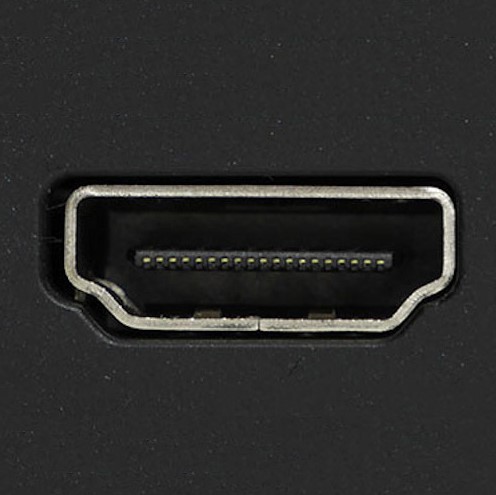 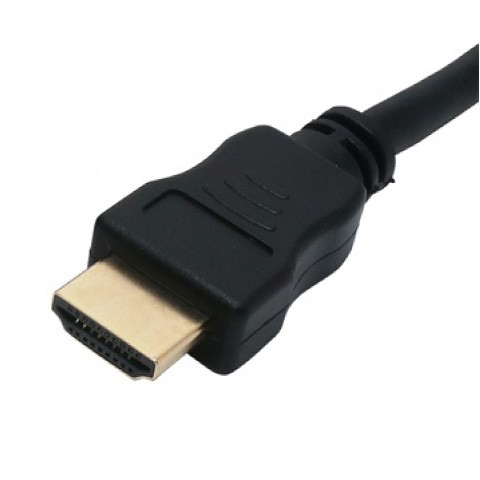 |
A multimedia interface that transmits video, audio, and control signals using TMDS. It is one of the most widely used interfaces and is supported by many devices. In addition to the most standard Type A shape [left diagram], there are three types: Type C and Type D. |
●DisplayPort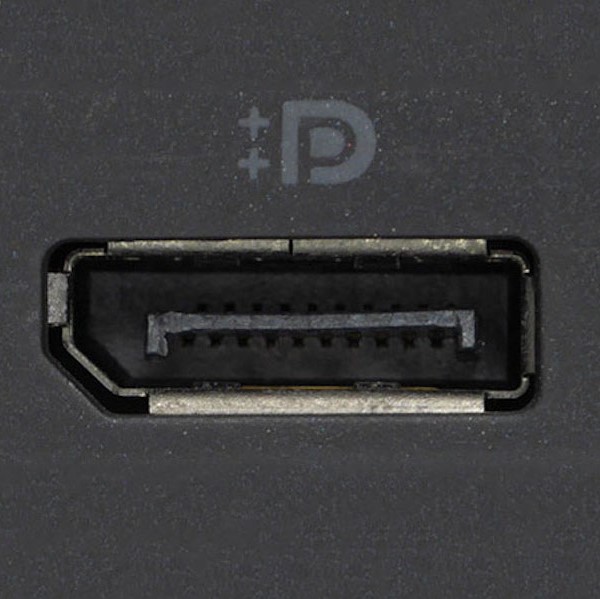 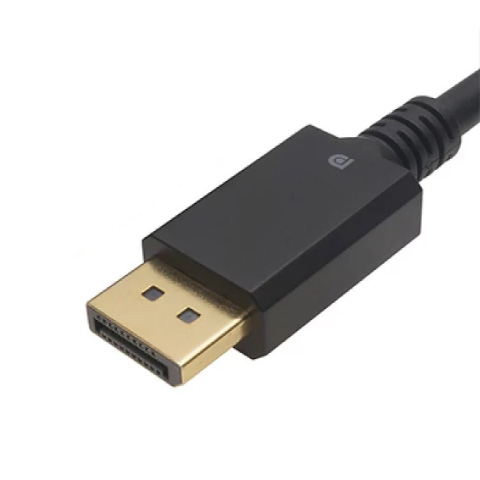 |
A transmission method developed as the successor to DVI, supporting high-resolution monitors. |
●RGB(VGA)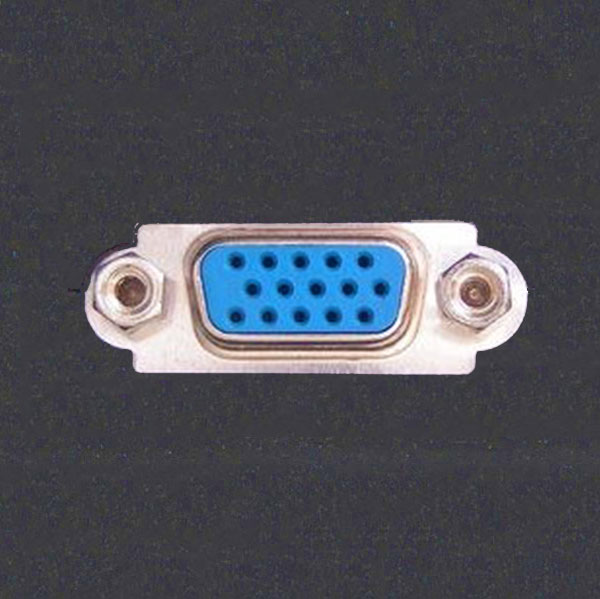 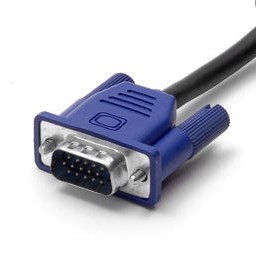 |
Consists of analog RGB signals and synchronization signals (HS/VS). High-density D-sub 15-pin connectors, etc., are used. |
●DVI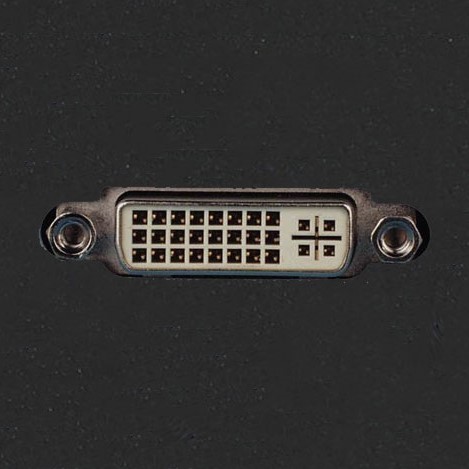 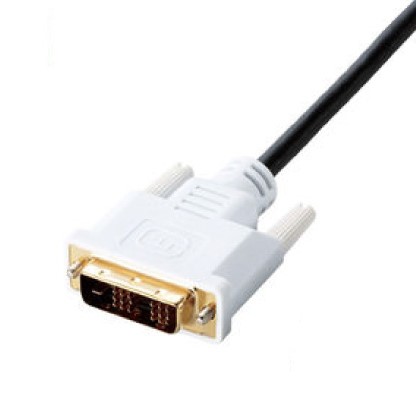 |
A digital video interface based on TMDS, widely used for transmitting video signals from PCs to monitors. It has since ceded its leading role to HDMI and DisplayPort. |
●CVBS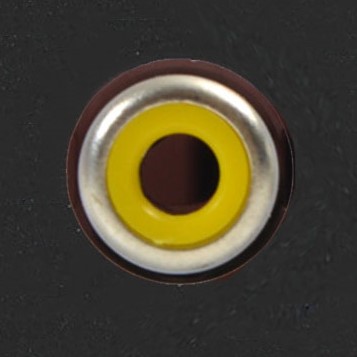 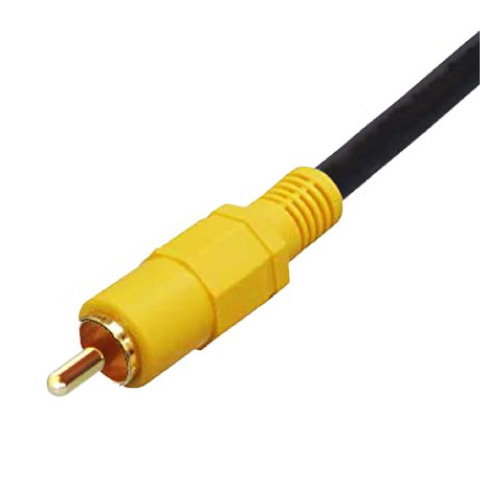 |
An analog video signal format used in television broadcasting systems such as NTSC. Used with RCA pin jacks (three-color cables), etc. |
| TMDS | A digital video signal transmission method consisting of four differential signal pairs: one pair each for RGB, and one pair for clock synchronization. The base standard for formats such as ‘DVI’, ‘HDMI’, and ‘LVDS’.。 |
Interface for Modules with Built-in LCD Controllers
| Name | Signal Image | Explanation of Communication Method |
|---|---|---|
| RS232C(UART) | 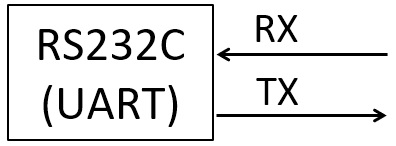 |
Used with LCDs that have built-in display data viewable only via commands. It consists of two lines: RX (receive data) and TX (transmit data), for sending and receiving commands. |
| I2C | 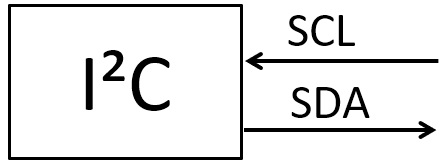 |
Primarily used in monochrome LCDs with low communication data volume. It employs a two-wire configuration of SCL (clock)/SDA (data) to transmit and receive display settings and display data. |
| SPI | 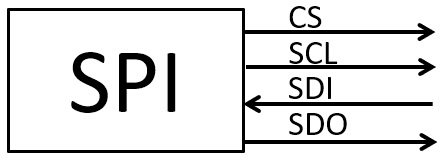 |
Primarily used in monochrome LCDs with low communication data volume. It transmits and receives display settings and display data via a 4-wire or 3-wire configuration: CS (Chip Select)/SCL (Clock)/SDI (Data Input)/SDO (Data Output). |
| 68-series CPU data bus | 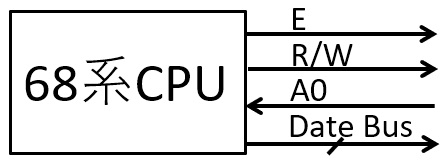 |
Controls the E (Enable), R/W (Read/Write), and A0 (Display Data/Command) pins of the 68-series CPU to send and receive display settings and display data over the data bus. |
| 80-series CPU data bus | 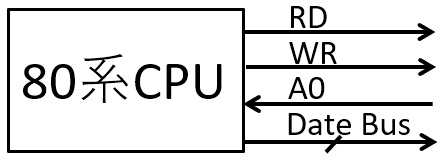 |
Controls the RD (read), WR (write), and A0 (display data/command) pins of the 80-series CPU to send and receive display settings and display data over the data bus. |
Interface for Modules Without Built-in LCD Controllers
| Name | Signal Image | Explanation of Communication Method |
|---|---|---|
| LVDS | 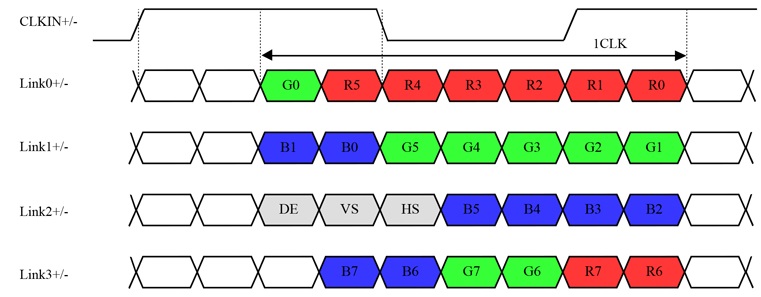 |
A differential signaling method used to transmit RGB data, clock signals, and synchronization signals (HS/VS/DE) to display modules. For high resolutions like Full HD, the scan lines are divided into two channels—even-numbered and odd-numbered lines—for transmission. |
| CMOS/TTL | 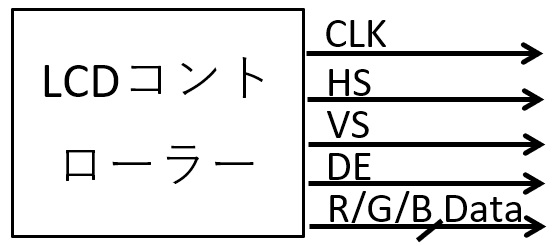 |
A method for transmitting 18-bit (6 bits per RGB) or 24-bit (8 bits per RGB) RGB signals and synchronization signals (CLK/HS/VS/DE) from an LCD controller at CMOS/TTL levels. |
| Driver Interface |
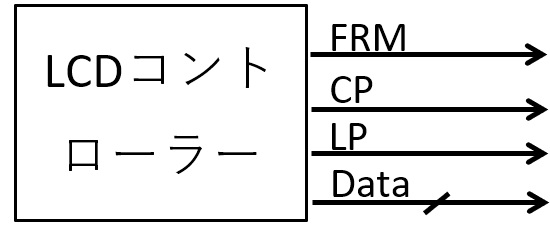 |
Connection method for segment/common drivers in passive-type graphic LCD modules (products without built-in LCD controllers). Transmits synchronous signals (FRM (Frame Period), CP (Data Shift), LP (Data Latch)) and display data. |
| eDP | ― | Abbreviation for “Embedded DisplayPort”. A standard developed for connecting DisplayPort to internal display modules in notebook PCs, tablets, and similar devices. |
| MIPI | ― | Abbreviation for “Mobile Industry Processor Interface”. An interface standard for cameras and displays in mobile devices. |